GE
IS420UCECH1B
$10000
In Stock
T/T
Xiamen
| Availability: | |
|---|---|
| Quantity: | |
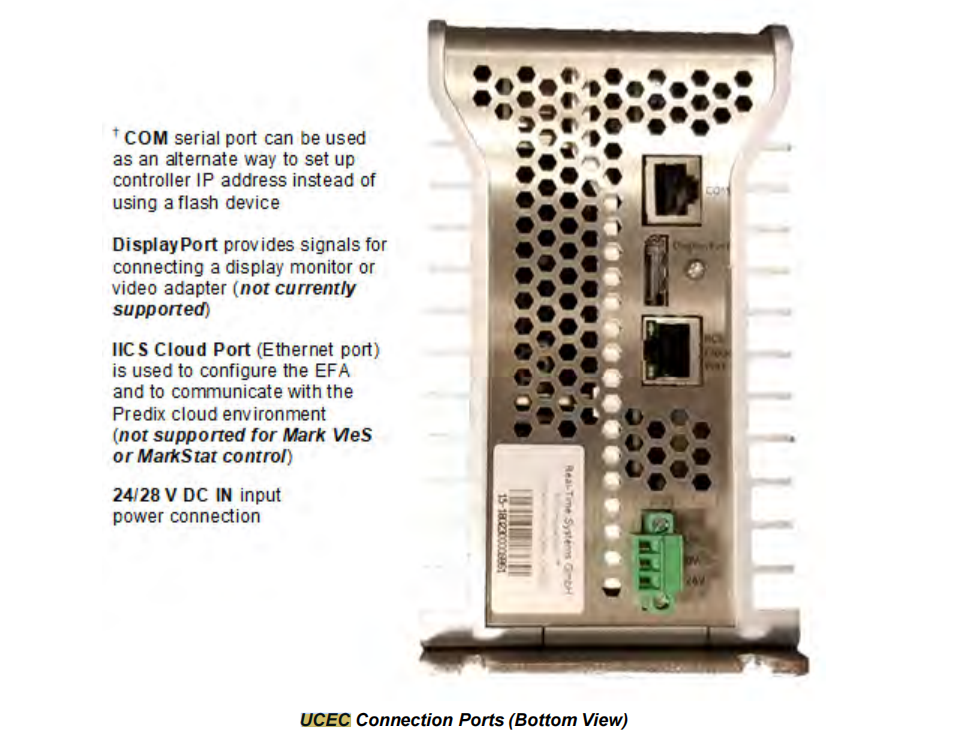
The IS420UCECH1B is a key component within GE's Mark* VIe control system. It is a specific variant of the UCEC module, which integrates a high-performance UCSCH1x controller with a 7-port I/O expansion board into a single, powerful control unit. Designed for complex industrial automation applications requiring numerous I/O connections, such as excitation control systems, wind turbine control, and gas/steam turbine control, it offers exceptional reliability, real-time processing capability, and flexible network configuration.
The IS420UCECH1B module is supported starting with ControlST V07.03 and is specifically engineered for Excitation control applications.
Hardware Composition and Architecture
The IS420UCECH1B module consists of two core hardware components:
UCSCH1x Controller:
Features an AMD G-Series quad-core processor running at 1.2 GHz, providing powerful real-time computing capability.
Equipped with 4 GB of DDR3-1333 SDRAM for high-speed data access.
Runs on the QNX Neutrino real-time operating system (RTOS), suited for high-reliability industrial environments.
Seven-Port I/O Expansion Board:
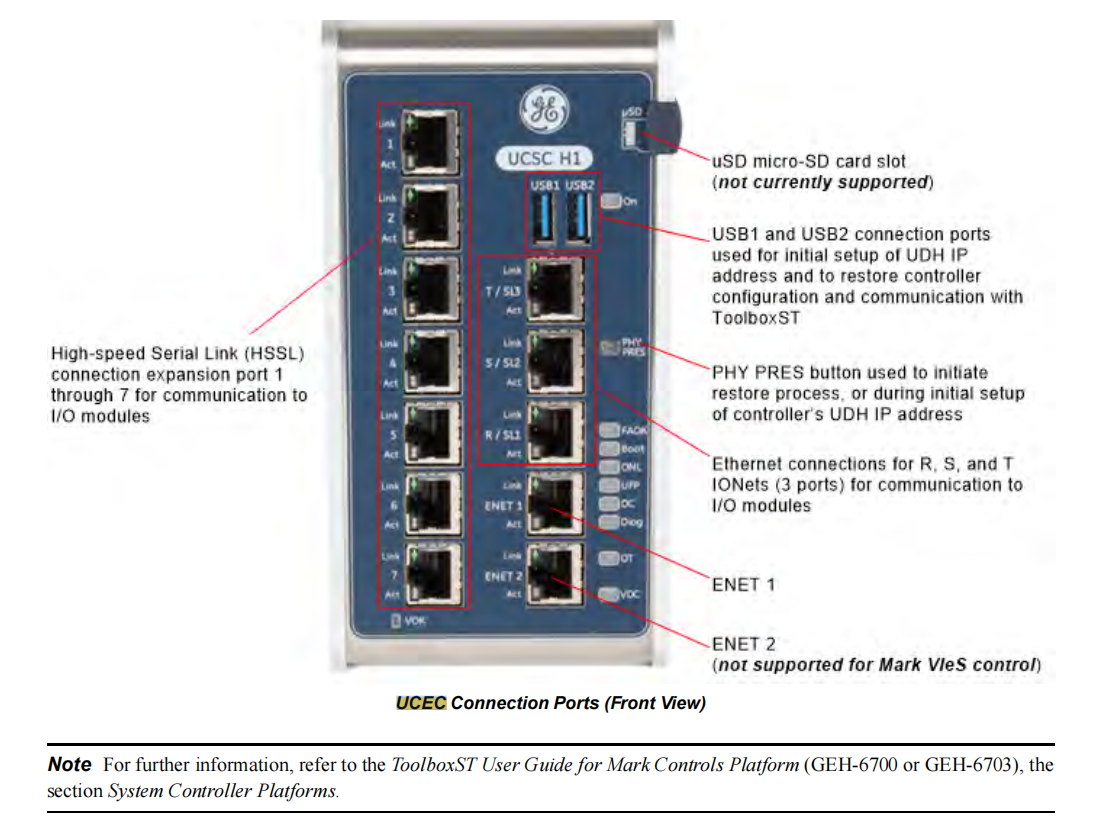
Provides 7 additional RJ-45 Ethernet ports for connecting distributed I/O modules.
Supports communication protocols such as IONet (I/O Network), PROFINET, EtherCAT, or High-Speed Serial Link (HSSL).
Combined with the controller's 3 native I/O ports, this offers up to 10 I/O network interfaces, significantly enhancing system connectivity.
The IS420UCECH1B features a modular, fanless, and batteryless design, offering good resistance to vibration, dust, and interference, making it suitable for harsh industrial environments.
Key Features and Functionality
1. High-Performance Multi-Core Processing
The quad-core processor supports parallel processing of multiple control tasks, ensuring stable operation even at high scan rates (e.g., 10 ms).
Supports Simplex, Dual-redundant, and Triple Modular Redundant (TMR) configurations to meet varying reliability requirements.
2. Flexible Communication Interfaces
IONet: A private Ethernet network dedicated to Mark controls, ensuring high-speed, synchronized communication between I/O modules and the controller.
Optional PROFINET or EtherCAT protocols for easier integration with third-party devices.
HSSL supports point-to-point synchronous communication for I/O modules with high real-time demands.
3. Embedded Field Agent (EFA) Support
Includes an Embedded Field Agent for secure connectivity to the Predix cloud platform, enabling data upload, edge computing, and remote monitoring.
Provides local web application hosting capabilities for customized data analysis and diagnostics.
4. Virtual Network and Virtual Machine Support
Based on hypervisor technology, it supports running multiple Virtual Machines (VMs) on a single hardware platform (e.g., Mark VIe control VM and EFA VM).
Data exchange between VMs occurs over an internal virtual network, eliminating the need for an external physical switch and enhancing system integration and security.
5. High-Precision Time Synchronization
Utilizes the IEEE 1588 (PTP) protocol to synchronize clocks between the controller and I/O modules with an accuracy within ±100 microseconds.
Ensures timing consistency for data acquisition and control outputs, critical for high-speed process control.
Operational Principle and Data Flow
As the core of the control system, the IS420UCECH1B operates as follows:
System Startup and Initialization:
Upon power-up, the controller loads the firmware and application stored in Flash memory.
Detects connected I/O modules via the IONet interfaces and performs automatic configuration (if Auto-Reconfiguration is enabled).
Data Acquisition and Processing:
I/O modules transmit field sensor and actuator data to the UCECH1B via IONet.
The controller executes real-time calculations based on predefined control logic (e.g., PID loops, sequencing, protection interlocks).
Control Output and Communication:
Calculation results are sent via IONet to the appropriate output modules to drive actuators.
Simultaneously, the controller exchanges data with HMIs, historians, or other control systems via the Unit Data Highway (UDH).
Redundancy and Fault Tolerance:
In redundant configurations, multiple UCECH1B controllers share all I/O data via IONet, ensuring seamless switchover if one controller fails.
Cloud-Edge Collaboration:
The EFA VM is responsible for encrypting and transmitting key data to the Predix cloud platform, supporting remote monitoring, predictive maintenance, and big data analytics.
Technical Specifications Summary
| Item | Specification |
|---|---|
| Processor | AMD G-Series Quad-Core 1.2 GHz |
| Memory | 4 GB DDR3-1333 SDRAM |
| Storage | 2 GB NAND Flash |
| I/O Ports | 3 native controller ports + 7 expansion ports (RJ-45) |
| Communication Protocols | IONet, PROFINET, EtherCAT, HSSL, Modbus TCP, OPC UA |
| Power Input | 24/28 V DC (Range: 18 – 30 V DC) |
| Power Consumption | Nominal 28 W, Maximum 42 W |
| Operating Temperature | -40°C to +70°C |
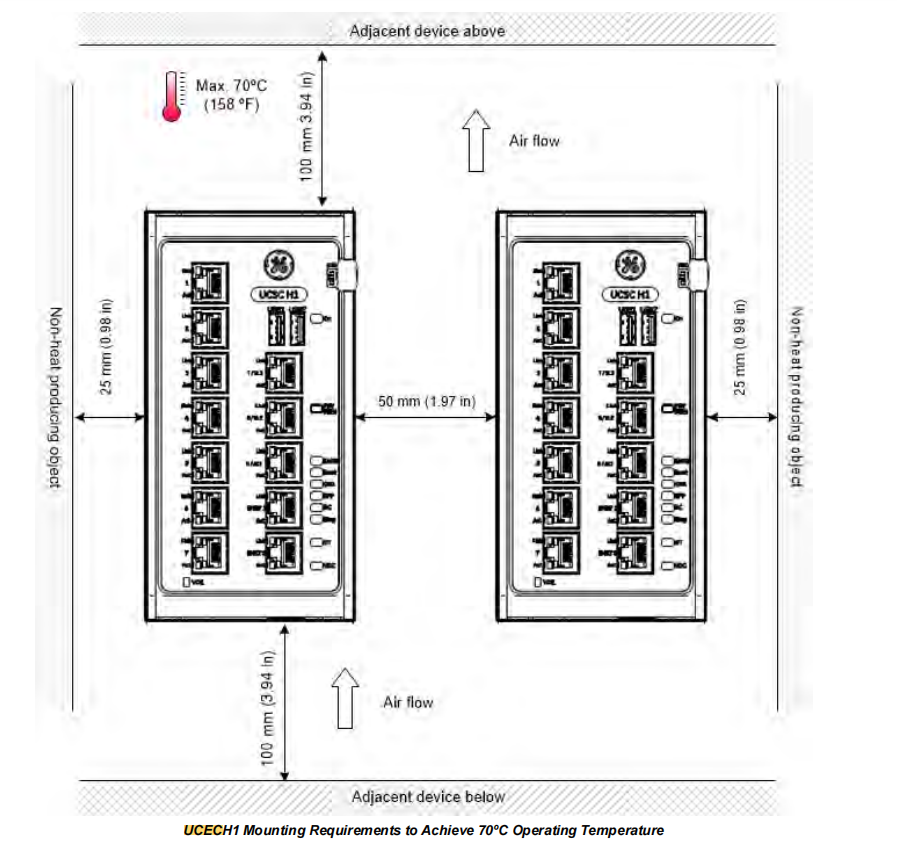
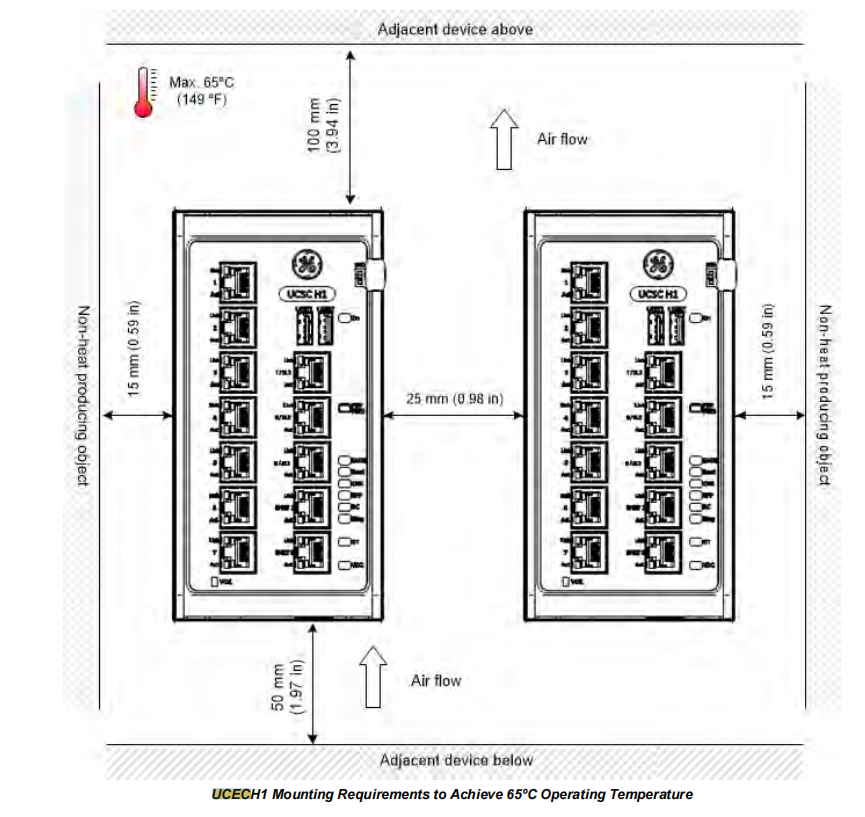
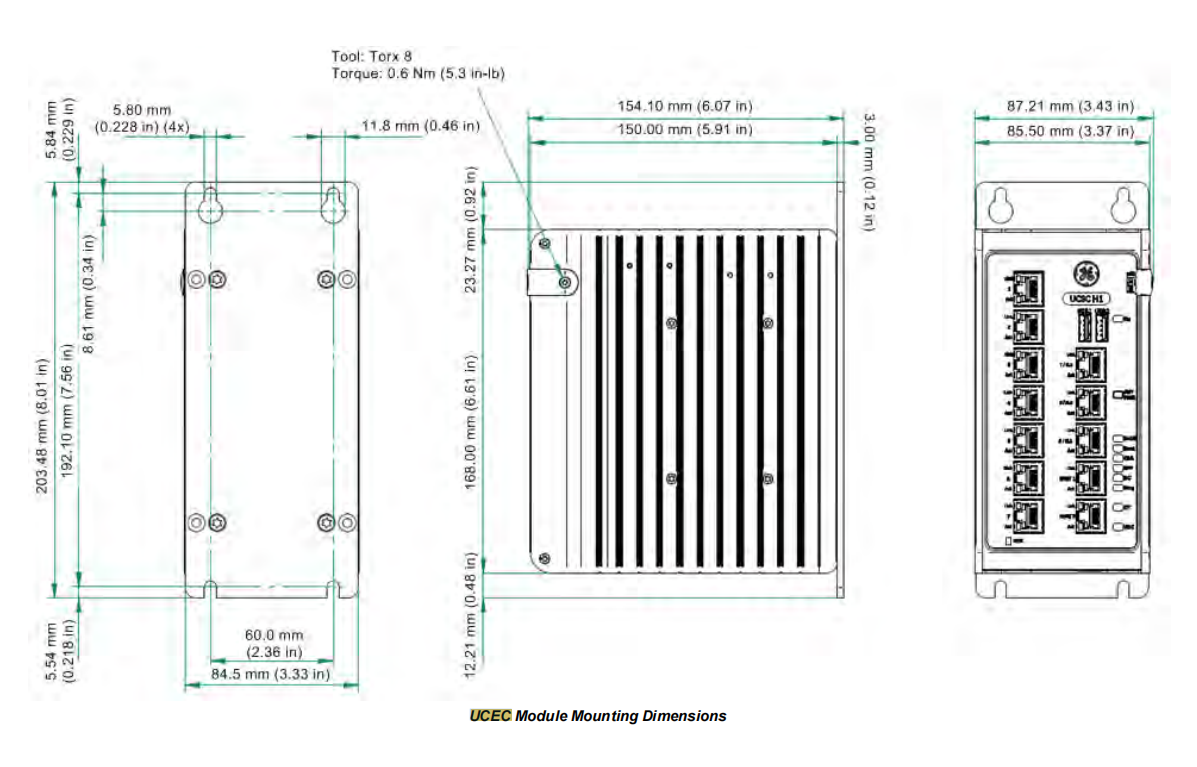
| Mounting | Vertical mount, minimum 100 mm air gap above/below required |
| Weight | 2060 g |
| Certifications | CE, ATEX, UL, CSA, RoHS, FCC |
Typical Applications
Excitation Control Systems: For voltage regulation and reactive power compensation of synchronous generators.
Wind Turbine Control Systems: Main controller or pitch control, supporting multiple sensors and actuators.
Gas/Steam Turbine Control: Managing critical functions like fuel valves, inlet guide vanes, and ignition.
Combined Cycle Power Plants (CCPP): Acting as a Balance of Plant (BOP) controller to coordinate auxiliary systems.
Industrial Process Control: Suitable for distributed control stations in industries like chemicals, water treatment, and mining.
The IS420UCECH1B is a key component within GE's Mark* VIe control system. It is a specific variant of the UCEC module, which integrates a high-performance UCSCH1x controller with a 7-port I/O expansion board into a single, powerful control unit. Designed for complex industrial automation applications requiring numerous I/O connections, such as excitation control systems, wind turbine control, and gas/steam turbine control, it offers exceptional reliability, real-time processing capability, and flexible network configuration.
The IS420UCECH1B module is supported starting with ControlST V07.03 and is specifically engineered for Excitation control applications.
Hardware Composition and Architecture
The IS420UCECH1B module consists of two core hardware components:
UCSCH1x Controller:
Features an AMD G-Series quad-core processor running at 1.2 GHz, providing powerful real-time computing capability.
Equipped with 4 GB of DDR3-1333 SDRAM for high-speed data access.
Runs on the QNX Neutrino real-time operating system (RTOS), suited for high-reliability industrial environments.
Seven-Port I/O Expansion Board:
Provides 7 additional RJ-45 Ethernet ports for connecting distributed I/O modules.
Supports communication protocols such as IONet (I/O Network), PROFINET, EtherCAT, or High-Speed Serial Link (HSSL).
Combined with the controller's 3 native I/O ports, this offers up to 10 I/O network interfaces, significantly enhancing system connectivity.
The IS420UCECH1B features a modular, fanless, and batteryless design, offering good resistance to vibration, dust, and interference, making it suitable for harsh industrial environments.
Key Features and Functionality
1. High-Performance Multi-Core Processing
The quad-core processor supports parallel processing of multiple control tasks, ensuring stable operation even at high scan rates (e.g., 10 ms).
Supports Simplex, Dual-redundant, and Triple Modular Redundant (TMR) configurations to meet varying reliability requirements.
2. Flexible Communication Interfaces
IONet: A private Ethernet network dedicated to Mark controls, ensuring high-speed, synchronized communication between I/O modules and the controller.
Optional PROFINET or EtherCAT protocols for easier integration with third-party devices.
HSSL supports point-to-point synchronous communication for I/O modules with high real-time demands.
3. Embedded Field Agent (EFA) Support
Includes an Embedded Field Agent for secure connectivity to the Predix cloud platform, enabling data upload, edge computing, and remote monitoring.
Provides local web application hosting capabilities for customized data analysis and diagnostics.
4. Virtual Network and Virtual Machine Support
Based on hypervisor technology, it supports running multiple Virtual Machines (VMs) on a single hardware platform (e.g., Mark VIe control VM and EFA VM).
Data exchange between VMs occurs over an internal virtual network, eliminating the need for an external physical switch and enhancing system integration and security.
5. High-Precision Time Synchronization
Utilizes the IEEE 1588 (PTP) protocol to synchronize clocks between the controller and I/O modules with an accuracy within ±100 microseconds.
Ensures timing consistency for data acquisition and control outputs, critical for high-speed process control.
Operational Principle and Data Flow
As the core of the control system, the IS420UCECH1B operates as follows:
System Startup and Initialization:
Upon power-up, the controller loads the firmware and application stored in Flash memory.
Detects connected I/O modules via the IONet interfaces and performs automatic configuration (if Auto-Reconfiguration is enabled).
Data Acquisition and Processing:
I/O modules transmit field sensor and actuator data to the UCECH1B via IONet.
The controller executes real-time calculations based on predefined control logic (e.g., PID loops, sequencing, protection interlocks).
Control Output and Communication:
Calculation results are sent via IONet to the appropriate output modules to drive actuators.
Simultaneously, the controller exchanges data with HMIs, historians, or other control systems via the Unit Data Highway (UDH).
Redundancy and Fault Tolerance:
In redundant configurations, multiple UCECH1B controllers share all I/O data via IONet, ensuring seamless switchover if one controller fails.
Cloud-Edge Collaboration:
The EFA VM is responsible for encrypting and transmitting key data to the Predix cloud platform, supporting remote monitoring, predictive maintenance, and big data analytics.
Technical Specifications Summary
| Item | Specification |
|---|---|
| Processor | AMD G-Series Quad-Core 1.2 GHz |
| Memory | 4 GB DDR3-1333 SDRAM |
| Storage | 2 GB NAND Flash |
| I/O Ports | 3 native controller ports + 7 expansion ports (RJ-45) |
| Communication Protocols | IONet, PROFINET, EtherCAT, HSSL, Modbus TCP, OPC UA |
| Power Input | 24/28 V DC (Range: 18 – 30 V DC) |
| Power Consumption | Nominal 28 W, Maximum 42 W |
| Operating Temperature | -40°C to +70°C |
| Mounting | Vertical mount, minimum 100 mm air gap above/below required |
| Weight | 2060 g |
| Certifications | CE, ATEX, UL, CSA, RoHS, FCC |
Typical Applications
Excitation Control Systems: For voltage regulation and reactive power compensation of synchronous generators.
Wind Turbine Control Systems: Main controller or pitch control, supporting multiple sensors and actuators.
Gas/Steam Turbine Control: Managing critical functions like fuel valves, inlet guide vanes, and ignition.
Combined Cycle Power Plants (CCPP): Acting as a Balance of Plant (BOP) controller to coordinate auxiliary systems.
Industrial Process Control: Suitable for distributed control stations in industries like chemicals, water treatment, and mining.