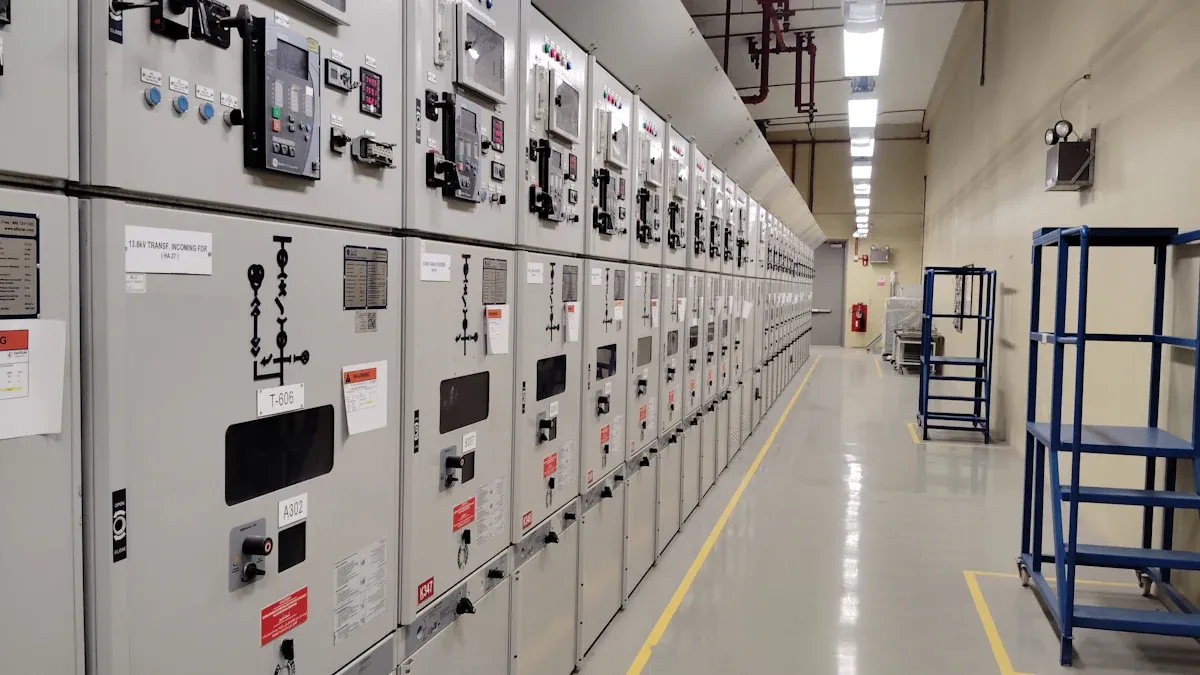
A distributed control system (DCS) helps you run and control big industrial jobs easily. You can watch, change, and improve every part of your work as it happens. Many companies use DCS because it works well and is dependable.
You can trust ABB to give you smart automation that helps you reach your safety, quality, and work goals.
Key Takeaways
A Distributed Control System (DCS) helps watch and control factory work in real time. It makes things run better and keeps people safe.
DCS is built in parts and can grow bigger. You can add new pieces or make it larger without starting over.
Using a DCS can lower the time machines stop working. It also saves money because it works well and reacts fast to data.
DCS works with other systems like PLCs and SCADA. This lets you control and watch many jobs at once.
Buying a DCS helps save energy and cut down on waste. It helps companies reach their green goals.
How DCS Works
DCS Architecture
Modular and Scalable System Design
A distributed control system can be made to fit your plant. You can add new parts as your plant gets bigger. You do not need to buy a whole new system to upgrade. You can choose the best hardware for your work. You can also change the control logic when you need to. The system connects with many types of devices. This helps you keep up with new jobs.
You only pick the hardware you need for your plant.
You can change how your system works with easy programming.
You can connect your system to other machines without trouble.
Custom Architecture Solutions by Exstar
Exstar Automation Services Co., Ltd. helps you make a dcs that fits your plant. Their engineers design systems for many industries like chemical plants and power stations. They work with top brands and make sure your system is just right for you.
Tip: A custom dcs can help you save money and time because it fits your process.
Main Components
Core DCS Elements
A distributed control system has a few main parts that work together:
Controllers run programs and handle process values.
Input/Output (I/O) modules link sensors and devices to the system.
Communication networks connect all the parts and move data.
Human-Machine Interfaces (HMI) let you see and control what is happening.
Engineering stations help you set up and take care of the dcs.
Here is how some important parts work together:
Component | Function |
Operator Station | Lets you see data and control what happens. |
I/O Modules | Take in data from sensors and send out commands. |
Controllers | Use the data to make choices and keep things running well. |
Engineering Support and Spare Parts by Exstar
Exstar helps you choose parts, test your system, and find spare parts. Their engineers help you upgrade, fix, and keep your dcs working well.
Data Flow
Real-Time Coordination of Control Loops
Your dcs uses real-time data to keep everything working together. Sensors and controllers all over your plant collect information. The system uses this data to make quick changes. It keeps things like temperature and pressure steady. Each part shares data so the whole plant works as one.
Sensors and controllers collect real-time data.
The dcs uses this data to control the process.
The system makes fast changes to keep things safe and working well.
Data Flow Optimization with Exstar's Technical Support
Exstar helps you set up your data flow for the best results. They use good I/O modules and strong networks to move your data fast and safely. Their support helps your system work faster and stay safe, even if something goes wrong.
Distributed Control System vs PLCs and SCADA
Key Differences
You might wonder how a distributed control system is different from PLCs and a scada system. Each system has its own job in factories and plants. The table below shows how they are not the same:
Feature | PLCs | DCS | SCADA |
Control Type | Local control and automation | Managing multiple processes | Supervisory control and monitoring |
Architecture | Centralized architecture | Distributed architecture | Centralized monitoring with remote access |
I/O Handling | Discrete I/O signals | Analog I/O signals | Real-time data acquisition |
Scalability | Highly scalable but limited capacity | Designed for large-scale systems | Integrates with PLCs and DCS |
Programming | Ladder logic or block diagrams | More complex languages | User-friendly interfaces for monitoring |
Applications | Manufacturing, robotics | Oil refining, chemical processing | Water treatment, energy distribution |
Tip: PLCs are good for easy jobs. DCS is better for hard jobs with many loops. SCADA helps you watch and control things from far away.
Integration
You can use all these systems together for better results. PLCs control machines and simple jobs. A distributed control system runs many jobs across your plant. The scada system lets you watch everything from one place. You can link PLCs to a DCS for local control. SCADA systems collect data from both PLCs and DCS, so you see your whole plant.
PLCs do jobs like turning pumps on and off.
DCS controls big operations using many control networks.
SCADA systems collect data and let you make changes from your computer.
When to Use Each
You should choose the best system for your plant. If your plant is small with only a few loops, PLCs may be enough. For big plants with many important jobs, you need a dcs. DCS is good when you want things to be safe and work well. SCADA systems are best when you need to watch and control things from far away.
Use PLCs for easy, local jobs.
Pick a distributed control system for big plants with many jobs.
Choose a scada system if you need to watch and control from a distance.
Note: Big refineries use DCS because they have lots of loops. Small places, like city water plants, often use PLCs or SCADA.
ABB Distributed Control System Applications
Industrial Sectors
ABB’s distributed control system is used in many big industries. Companies pick ABB’s DCS because it helps them work better and safer. It also lets them use new technology. The table below shows where these systems are used and why they work well:
Sector | Reasons for Selection |
Energy | Making work better, stopping problems, keeping computers safe |
Water | Helping workers learn new things, using data to make choices |
Chemicals | Making work better, keeping computers safe |
Metals | Stopping problems, using new technology |
Cement | Making work better, helping workers learn new things |
Paper | Keeping computers safe, using new technology |
Plastics | Stopping problems, making work better |
You will find ABB DCS series like Advant 800xA, Bailey INFI 90, Freelance 2000, and Procontrol in these industries. Advant 800xA is used in power plants. Bailey INFI 90 works in chemical factories. Freelance 2000 helps water treatment plants. Procontrol is used in steel and metals factories.
Real-World Examples
ABB’s DCS helps in real projects in many ways:
In energy, control systems find safety problems fast. If there is a gas leak or a broken machine, the system can shut things down quickly to keep people safe.
ABB’s remote rock breaking system lets miners work from far away. This keeps workers safe and helps the job go faster.
Cities use automatic meter reading with wireless networks. This keeps workers safe because they do not have to do dangerous jobs by hand.
When you upgrade your system, ABB modules like DSQC658 and DAI01 make it simple. These parts work with many brands, so you can change or add new pieces easily. ABB also gives strong support and spare parts. This helps your plant work well and stops long breaks.
Tip: Using easy-to-change parts and expert help keeps your system working and ready for new jobs.
DCS Benefits
Reliability
You can trust a distributed control system to keep things running well. DCS uses special numbers to show how reliable it is. Two important numbers are:
These numbers help you know if your system is dependable. With a DCS, you have fewer surprise stops. For example, one petrochemical plant had 60% less downtime after using a better system. This saved them millions of dollars. You also get one place to watch everything, so you need fewer workers to check machines. This saves money and lets your team do more important jobs.
Scalability
A DCS can grow as your business gets bigger. You can add new parts or make your plant larger without starting from scratch. The system is built so each part can make choices by itself. If one controller stops working, the others keep going. This helps your plant stay open.
Feature | How It Helps You Expand |
Decentralized Architecture | Lets you add new areas easily |
Fault Tolerance | Keeps your plant safe if one part fails |
Easy Integration | Connects new devices without big changes |
Remote I/O modules make it easy to change or add new jobs. You can also use new technology when you need it. This means your DCS will not slow you down as your plant grows.
Efficiency
A DCS helps you work better and save resources. The system gets real-time data from sensors and sends clear commands to machines. This keeps things like temperature and pressure steady. You use less energy and fewer materials because the system always finds the best way to work.
Improvement Type | What You Gain |
Operational Efficiency | Fewer mistakes and higher productivity |
Flexibility and Scalability | Quick changes and easy upgrades |
Improved Safety and Reliability | Early warnings to prevent accidents |
You get a system that helps you make more and waste less. This saves you money and is good for the environment.
Distribution Control System for the Future
Innovation
Many new ideas are changing control systems in plants. Now, you can connect your system to the cloud. You can use smart robots and let machines learn from data. These changes make work faster and safer. The table below lists top innovations and how they help:
Innovation | Impact on DCS and Industrial Automation |
Cloud-network-end architecture | Makes your system simple and more efficient |
Integration of AI and machine learning | Lets your system make smart choices on its own |
Robotic process automation (RPA) | Speeds up work and cuts down on delays |
Fusion with SCADA and IIoT | Gives you better real-time data and control |
Digital transformations | Helps you adapt, stay reliable, and protect the environment |
AI can guess when machines might break. This helps you fix problems before they stop your plant. Machine learning finds the best way to run your process. Some systems let you talk to them using normal language. This makes your job easier. More factories use Industry 4.0 tools now. Open distributed control system designs are becoming common. These systems help you connect everything and keep your plant running well.
Tip: New technology saves time, lowers costs, and keeps your plant safe.
Sustainability
A distributed control system helps your plant be greener. These systems help you use less energy and make less waste. They help you follow environmental rules. Here are ways a DCS supports sustainability:
Smart monitoring systems help you use less energy.
Precision controls cut down on waste.
Advanced analytics help you use resources wisely.
Good process management lowers harmful emissions.
Benefit | Description |
Energy Efficiency | Optimizes how much energy you use and supports renewable energy |
Waste Minimization | Reduces waste by controlling processes closely |
Resource Utilization | Uses data to make the best use of materials |
Emission Reduction | Manages processes to keep emissions low |
You can use your system to track emissions and report them. This helps you follow the law and avoid fines. Many companies in oil, gas, and chemicals use DCS to stop spills and manage waste. More plants focus on clean energy and smart grids now. DCS will help meet global sustainability goals.
You can use ABB’s distributed control system to make your plant better and safer. ABB gives you helpful tools to watch and control your work.
Key Features | Strengths |
Integrated control platform | Connects electrical and process systems well |
Scalable controllers and I/O | Lets you add more as your plant gets bigger |
Built-in safety system | Helps keep your plant safe |
You get live data so you can decide fast.
You can add new tools when your plant needs them.
You have less downtime and your plant works better.
ABB’s DCS helps you reach your goals now and get ready for what comes next.
FAQ
What is a distribution control system?
You use a distribution control system to run many parts of a plant. This system helps you watch your work as it happens. You can change things and make them better right away. It helps you keep your plant safe and working well.
How does a distribution control system improve safety?
A distribution control system gives you live data and quick warnings. You can see problems early and fix them fast. This system helps stop accidents and keeps everyone safe. You can trust it to protect your team.
Can you upgrade a distribution control system as your plant grows?
Yes, you can add new parts to your system. You do not need to buy a whole new system. This makes it easy to grow your plant. You can keep up with new jobs using your distribution control system.
What industries use a distribution control system?
Many industries use a distribution control system. Power plants, chemical factories, water plants, and paper mills use it. You can use this system anywhere you need to control many jobs at once.
Why should you choose a distribution control system over other control systems?
A distribution control system helps you run hard jobs in your plant. You get better control and more safety. Upgrades are easier too. You can trust it to handle big tasks that other systems cannot do as well.