Operating aging gas turbines, steam turbines, or excitation controls on legacy systems introduces escalating risks of unplanned downtime and unmanageable maintenance costs. Plant managers and control engineers face critical obsolescence challenges with early generation Speedtronic systems, compounded by the complexity of cross-generational part compatibility, opaque migration paths, and misunderstood upgrade capabilities. When a core processor fails or an I/O card degrades, finding a direct replacement is rarely a simple swap. Hardware revisions, firmware mismatches, and depleted global inventories create significant roadblocks for maintenance teams trying to keep older units online.
This guide provides a technical evaluation framework for navigating GE Mark spare parts compatibility, detailing the realities of sourcing, upgrading, repairing, and maintaining Mark V, Mark VI, Mark VIe, and Mark VIeS control systems across diverse industrial applications. By understanding the specific architectural boundaries and migration strategies available, operators can extend the lifecycle of their existing assets while planning a secure path forward.
Part Number Architecture: Understanding the specific alphanumeric revisions in GE Speedtronic part numbers is critical; minor suffix changes often dictate firmware or hardware compatibility.
Migration Realities: Upgrading from Mark V to Mark VIe does not always require a full "rip-and-replace"; phased migrations can retain existing I/O terminations if compatibility is properly validated, offering significant cost savings.
Sourcing Risks: Relying on secondary markets for legacy Mark V and VI parts requires rigorous vendor vetting for testing capabilities, warranty terms, and anti-counterfeit measures.
Future-Proofing: The Mark VIe and VIeS ecosystems offer modular scalability across a full spectrum of applications, but migrating requires careful translation of legacy logic, network architecture (IONet) validation, and proactive logistics planning.
Table of Contents
Toggle
How GE Speedtronic Systems Evolved: Mark V to Mark VIeS
Mark V: The Legacy Standard
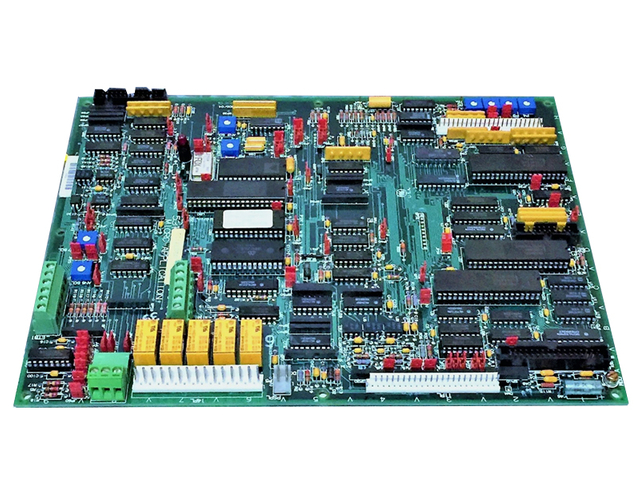
The Mark V system established a robust standard for turbine control using Triple Modular Redundant (TMR) architecture. It relied on DOS-based interfaces, ARCnet communications, and proprietary backplanes to manage turbine operations. Field engineers who have worked with the I processor and the processor know the specific quirks of these systems. Today, operators face severe obsolescence pain points. Failing core boards like the SDCC or TCQA, unsupported Human Machine Interfaces (HMIs) running on outdated operating systems, and a rapidly depleting global spare parts inventory make maintaining these legacy systems increasingly difficult. Finding reliable replacements requires deep technical knowledge of early generation hardware and a network of trusted secondary suppliers.
When a Mark V system experiences a fault, diagnostics are often limited compared to modern standards. Troubleshooting requires interpreting hex codes and navigating legacy interface screens. The physical hardware, including the Proms containing the control sequence program, degrades over time due to thermal cycling and environmental exposure. Sourcing a replacement board is only the first step; ensuring the EPROMs are correctly transferred or flashed is where many maintenance teams encounter unexpected downtime.
Mark VI: The Transition Architecture
The Mark VI control system represented a significant architectural shift. GE introduced Ethernet-based communications and transitioned to Windows-based HMIs, modernizing the user interface and data management capabilities. The introduction of the VME rack architecture allowed for more dense I/O configurations and faster processing speeds using the UCVx series of controllers. Despite these advancements, the Mark VI is now navigating its own lifecycle challenges. The availability of OEM support is narrowing, and specific VCMI communication boards are becoming harder to source.
Plant operators must carefully manage their inventory as the market for original, unused Mark VI components shrinks. The transition from Mark V to Mark VI introduced new complexities in network management. While Ethernet provided faster data transfer, it also required plant personnel to develop new networking skills. Maintaining a Mark VI system today involves balancing the need for legacy VME boards with the reality of aging power supplies and cooling fans within the control panels.
Mark VIe & Mark VIeS: Modern Distributed Control
The Mark VIe Distributed Control System (DCS) utilizes a highly modular and flexible architecture. It supports a wide range of applications, including gas, steam, wind, and excitation controls. The Mark VIeS variant introduces SIL-rated safety protocols for critical process protection. Modular upgrades within this ecosystem drive long-term operational efficiency. The platform relies on standardized, commercially available network hardware known as IONet. This shift away from proprietary backplanes significantly improves long-term part availability and simplifies network maintenance.
Instead of a centralized VME rack, the Mark VIe uses distributed I/O packs that mount directly onto terminal boards. This reduces field wiring runs and isolates faults to specific I/O modules rather than taking down an entire rack. The controllers (such as the UCSA or UCSB) communicate with these I/O packs over the redundant IONet. This architecture allows for online replacement of I/O packs, drastically reducing maintenance windows and improving overall plant availability.
How to Check GE Mark Spare Parts Compatibility
Understanding Part Numbers and Revisions
Navigating GE Mark spare parts compatibility begins with decoding the alphanumeric part numbers. The prefix dictates the component type. For instance, an IS200 prefix indicates a base printed circuit board (PCB) hardware component. An IS215 prefix typically denotes an assembly that includes the board pre-loaded with specific firmware. Revision letters at the end of the part number (such as A, B, or C) heavily impact backward and forward compatibility. You must cross-reference official OEM manuals, like the GEH-6721 System Guide, to verify whether a specific revision will function correctly within your existing chassis.
A common mistake in the field is assuming that a board with a higher revision letter is automatically backward compatible. In many cases, a revision change indicates a shift in the underlying chipset or a modification to the edge connector pinout. Installing an incompatible revision can lead to immediate hardware faults or subtle timing errors that only manifest during transient turbine operations. Always verify the exact part number and revision required by your specific Control Sequence Program (CSP) or ToolboxST configuration.
Cross-Generational Component Overlap
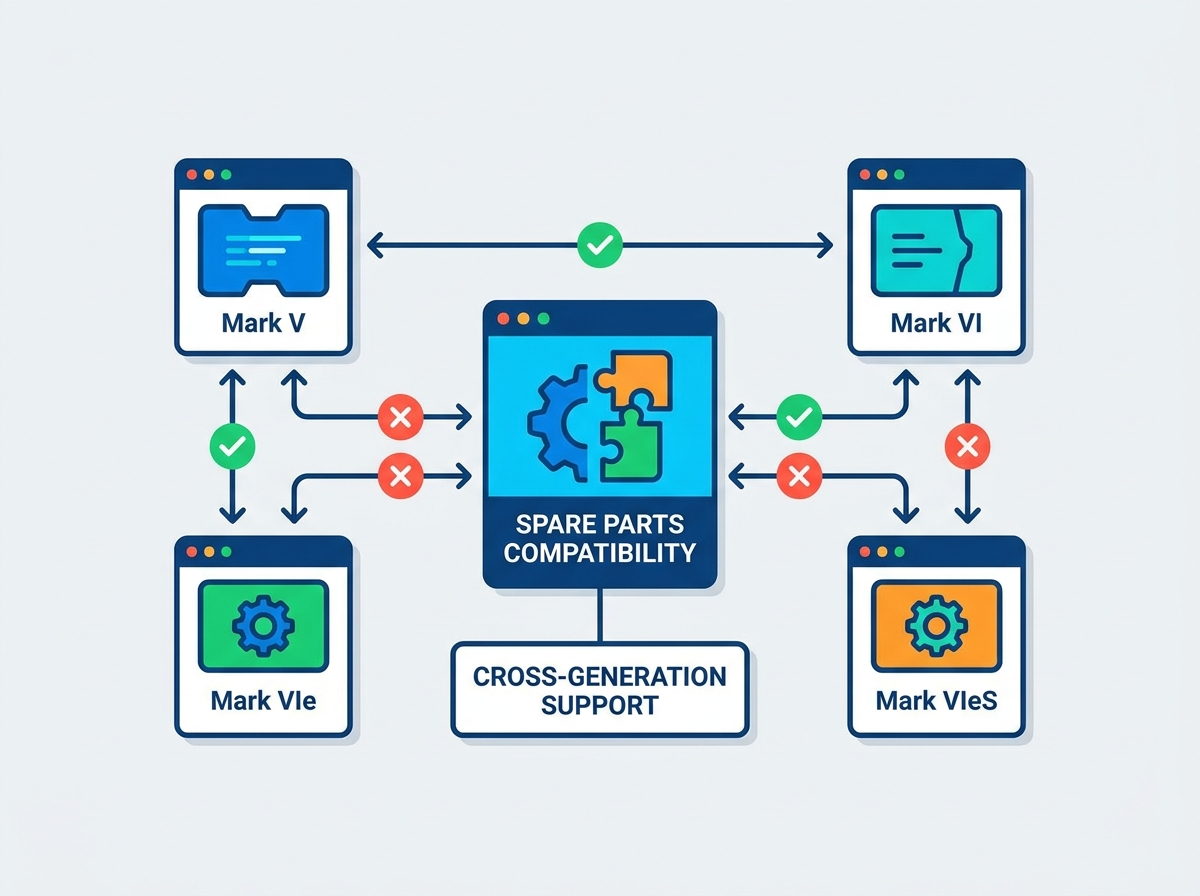
A common misconception is that components are universally interchangeable between Mark VI and Mark VIe systems. While they share similar naming conventions, cross-generational component overlap is extremely limited. The hard boundaries where compatibility fails include specific I/O packs, main controllers, and terminal boards. The Mark VI utilizes a VME rack-based architecture, whereas the Mark VIe relies on distributed I/O over IONet. Attempting to mix these incompatible core components will result in system failure.
There are very few exceptions to this rule. Some basic terminal boards might share physical dimensions, but the active electronics interfacing with them are fundamentally different. The communication protocols—VME backplane versus Ethernet-based IONet—create a hard stop for component sharing. When planning inventory, treat Mark VI and Mark VIe as entirely separate ecosystems to avoid costly procurement errors.
Form, Fit, and Function Replacements
When original revisions are unavailable, operators often evaluate form, fit, and function replacements. This involves using newer revision boards in older chassis. Some aftermarket vendors engineer improved parts to resolve legacy OEM design flaws, such as replacing failure-prone capacitors. However, installing replacement parts requires strict adherence to technical requirements. You must ensure proper firmware flashing and configuration matching so the new board communicates seamlessly with the existing processors.
Part Prefix
Definition
Compatibility Consideration
IS200
Base Printed Circuit Board (PCB)
Hardware only; requires verification of physical fit and revision letter.
IS215
Firmware-Loaded Assembly
Includes software; firmware versions must match existing system logic.
IS220
I/O Pack (Mark VIe)
Strictly compatible with Mark VIe distributed architecture via IONet.
IS420
Advanced I/O Pack (Mark VIe)
Requires specific ToolboxST versions for proper configuration and mapping.
Mark V to Mark VIe Migration Options and Upgrade Considerations
Phased Upgrades vs. Full System Replacement
Upgrading a legacy control system forces a choice between a complete rip-and-replace and a phased upgrade. A full system replacement requires significant capital expenditure and extended operational downtime. You have to pull all the old cabinets, run new field wiring, and perform extensive loop checks. Conversely, a phased upgrade allows you to retain specific legacy components, reducing immediate costs. Many operators misunderstand the Mark V to Mark VIe migration path. By clarifying exactly which components are retained, plant managers can demystify the process and better manage their upgrade budgets.
A phased approach minimizes risk by keeping the existing field wiring untouched. The core logic is upgraded to the Mark VIe platform, providing modern diagnostics and HMI capabilities, while the physical connection to the turbine sensors and actuators remains intact. This strategy is particularly effective for plants with tight outage windows where a full rewiring project is simply not feasible.
Retaining Legacy I/O Terminations
One of the most effective migration strategies involves retaining existing Mark V termination boards. GE provides specific migration hardware that allows you to mate modern Mark VIe I/O packs directly to legacy field wiring terminations. This hybrid approach eliminates the need to rewire the entire turbine. However, you must carefully assess the physical space, cooling capacity, and power supply requirements within the existing panels to accommodate the new distributed I/O hardware.
The migration kits typically include adapter cables and mounting brackets designed to fit within the original Mark V cabinet footprint. Field engineers must pay close attention to grounding and shielding requirements when installing these adapters. Improper grounding can introduce noise into the new IONet system, causing intermittent communication drops. A thorough site walkdown is required to verify that the existing cabinets have adequate ventilation for the new I/O packs, which can generate different heat profiles than the legacy boards.
Software and Logic Translation Risks
Hardware compatibility is only half the battle. Translating legacy Control Sequence Program (CSP) logic to the modern ToolboxST environment introduces significant risks. Engineers must carefully map every function block to ensure operational consistency. Common pitfalls include improper alarm mapping and the loss of critical diagnostic data during the migration. Thorough logic validation is required to prevent unexpected turbine trips after commissioning.
The translation process is rarely a simple one-to-one conversion. Legacy Mark V logic often contains custom patches or undocumented workarounds implemented by site engineers over the years. These custom modifications must be identified, analyzed, and properly recreated in ToolboxST. Failing to account for these site-specific logic variations will result in a control system that does not behave as expected during startup or load rejection scenarios.
How to Source, Repair, and Test GE Mark Replacement Parts
OEM vs. Third-Party Refurbished Components
When sourcing legacy parts, you must establish strict success criteria for selecting a vendor. Evaluate their inventory depth, testing transparency, and warranty terms. Purchasing new OEM stock offers peace of mind but often comes with high costs and long lead times. Certified refurbished parts from independent specialists provide a viable alternative. You must weigh the cost-to-risk ratio carefully, ensuring that any third-party vendor utilizes rigorous anti-counterfeit measures.
A reputable third-party vendor will provide detailed documentation of their refurbishment process. This includes visual inspection, component-level testing, and full functional verification in a live test panel. Ask potential vendors about their specific testing capabilities for the exact board revision you need. If a vendor cannot demonstrate a robust testing protocol, the risk of installing a dead-on-arrival component is too high.
Component Repairs and Field Services
In some cases, repairing a failing board is more practical than sourcing a full replacement. Component-level repairs often involve replacing degraded capacitors, relays, or resistors. You must decide whether a repair will yield long-term reliability or if a replacement is necessary. Partnering with vendors who offer comprehensive field service support for both turbine and excitation controls ensures that repaired boards are properly installed and calibrated on-site.
Field service engineers bring invaluable experience when integrating repaired components back into a live system. They can verify that the root cause of the original failure was actually the board itself and not an external issue like a grounded field device or a failing power supply. This holistic approach to troubleshooting prevents repeat failures and extends the overall lifespan of the control system.
Testing and Certification Standards
Never install a legacy board without verifying its functionality. Vendors must utilize stringent testing protocols before shipping a replacement part. Necessary certification standards include live-panel testing, load testing, and thermal cycling. These procedures ensure the board can withstand the harsh environmental conditions of an active power plant. Demand documented testing reports for every component you purchase.
Live-Panel Functional Testing: Verifies the board communicates correctly with the main processors and executes logic without errors.
Thermal Cycling: Exposes the board to temperature extremes to identify weak solder joints or failing silicon components.
Load Testing: Applies simulated field loads to relay outputs and analog inputs to ensure they perform under actual operating conditions.
Managing Lead Times, Logistics, and Diagnostics
Market scarcity for Mark V and Mark VI parts requires proactive logistics planning. Build an internal critical spares inventory based on historical failure rates and current market availability. Integrating advanced diagnostics helps forecast part failures before they cause unplanned outages. By anticipating component degradation, you can manage lead times effectively and maintain continuous plant operation.
Relying on a run-to-failure strategy is no longer viable for legacy Speedtronic systems. Plant managers must conduct regular inventory audits and identify single points of failure within their control architecture. Establishing a relationship with a trusted parts supplier before an emergency occurs ensures you have priority access to critical components when you need them most.
Common GE Mark Upgrade Risks and How to Reduce Them
Firmware and Software Mismatches
Installing a replacement board with incompatible firmware is a severe risk. It can cause immediate system faults or TMR voting mismatches, leading to a turbine trip. To mitigate this risk, maintain strict version control documentation for your entire control system. Conduct pre-installation firmware audits to ensure the new board exactly matches the software requirements of your existing processors.
When a firmware mismatch occurs in a TMR system, the processors may fail to synchronize, resulting in a loss of redundancy. Field engineers must use the appropriate software tools to verify the firmware version on the replacement board before inserting it into the rack. If a flash update is required, follow the OEM procedures meticulously to avoid bricking the component.
Network Architecture Conflicts (IONet)
The Mark VIe relies on the IONet architecture for distributed communication. Integrating new controllers into existing network topologies can introduce communication drops or latency issues. You must validate network switch compatibility before installation. Adhere strictly to GE's established IONet cabling and configuration standards to maintain network integrity and prevent data bottlenecks.
IONet requires specific managed switches configured with precise IGMP snooping and multicast settings. Using unmanaged commercial off-the-shelf switches will flood the network with traffic, causing the I/O packs to drop offline. Always use approved network hardware and verify the switch configurations during the commissioning phase.
Commissioning Downtime
Unforeseen compatibility issues during a migration or major part replacement can lead to extended outages. Commissioning downtime is a critical financial risk. Mitigate this by conducting comprehensive Factory Acceptance Testing (FAT) prior to site deployment. Utilizing digital twins or simulation tools allows engineers to test logic and hardware integration in a virtual environment, resolving conflicts before they impact the physical plant.
A robust FAT process involves simulating all critical turbine operations, including startup sequences, load changes, and emergency trips. This allows the engineering team to verify the translated logic and ensure the new hardware responds correctly to simulated field inputs. Investing time in a thorough FAT significantly reduces the risk of schedule overruns during the actual site outage.
Conclusion
Maintaining legacy GE Speedtronic systems requires a proactive approach to hardware management. While Mark V and VI systems can be sustained temporarily through refurbished markets and component repairs, long-term reliability heavily favors a strategic migration to the Mark VIe ecosystem. Understanding part revisions and migration pathways is essential for minimizing operational risk.
When evaluating parts vendors or migration partners, prioritize entities that offer transparent testing procedures. Look for deep engineering expertise in logic translation and a proven track record of executing phased upgrades and providing robust field service support.
Founded in 2010, Exstar is an industrial automation spare-parts supplier serving turbine control, distributed control, sensing, emergency shutdown, turbine supervisory instrumentation, and programmable logic controller applications. Its engineering-led sales team supports system architecture proposals, part-number selection, system testing, and after-sales service, helping operators make more informed decisions when sourcing legacy components or planning control-system upgrades.
To secure your control system's future, take the following next steps:
Conduct a comprehensive site audit to accurately catalog all existing part numbers and revision letters.
Identify critical single-points-of-failure within your current control architecture.
Request a formal feasibility study from a qualified vendor to evaluate a phased Mark VIe upgrade.
Establish a secure inventory of verified critical spare parts for immediate deployment.
FAQ
Q: Are Mark VI parts compatible with Mark VIe systems?
A: Generally, no. While they share similar naming conventions, Mark VIe utilizes a fundamentally different distributed I/O architecture (IONet) compared to the VME rack-based Mark VI.
Q: Can I upgrade a Mark V system without rewiring the entire turbine?
A: Yes. GE offers migration paths that allow the retention of existing Mark V terminal boards and field wiring, replacing only the core controllers and I/O interfaces with Mark VIe equivalents.
Q: What does the "S" in Mark VIeS stand for?
A: The "S" stands for Safety. The Mark VIeS is a standalone Safety Instrumented System (SIS) designed to meet SIL 2 and SIL 3 requirements for critical process protection.
Q: How do I determine the revision of my GE Speedtronic board?
A: The revision is typically denoted by the final letters in the alphanumeric part number printed on the board's faceplate or PCB (e.g., IS200TRLYH1B, where "B" is the revision). Always cross-reference with official documentation like the GEH-6721 manual.
Q: Is it safe to use refurbished Mark V spare parts?
A: Yes, provided they are sourced from reputable vendors who perform rigorous, live-panel functional testing and offer substantial warranties to guarantee performance.
Q: What is the difference between IS200 and IS215 part numbers?
A: IS200 generally refers to the base printed circuit board (PCB) hardware, while IS215 typically denotes an assembly that includes the board pre-loaded with specific firmware or software.
Q: Do these compatibility rules apply to GE Excitation systems?
A: Yes. Many GE Excitation controls (like the EX2100 and EX2100e) share architectural similarities and even specific control boards with the Mark VI and Mark VIe turbine control platforms, making part number verification equally critical.